

The Algorithm is Stripping Our Truth
The most important details don't make the highlight reel


We live in a world of listicles and viral reels. Algorithms decide which stories get told based on a three-second watch time. How can we “hook” the reader and get clicks and sell products?
I fear we have lost a piece of humanity.
The messy piece.
And that’s the good stuff.
My logo is catchy. My Instagram content usually goes viral. I rework titles to consider how to get the most open rates. I’ve made consumable content about women’s history. But we need more. More nuance, more layers—more humanity. It’s why I am so grateful for Substack, a place for exploration and deep dives. One cannot find bravery without pain. For every win there is great loss. Under every highlight reel is a woman with flaws and failures.
We cannot erase that side of the story.
I first came to women’s history as a kid listening to my father’s U.S. history lectures. For me, it started with a question. “Where were all the women?” We were omitted. Erased. Buried. But I think it’s important to look at the moment I first felt inspired by a historical woman.
Many of you know this is an Eleanor Roosevelt fan page. What you don’t know is that I was a teen when I first lit up with the idea of who she was, and it wasn’t her incredible accomplishments and activism that hooked me to her story. It was one sentence:
Her mother called her Granny.
That was it. That was the moment her story became my biggest inspiration in life. Her mother was an athletic and beautiful socialite, and she honestly disliked her serious daughter. She taunted her, calling her boring, homely, and awkward. Eleanor was orphaned by age ten. Her mother died first of diphtheria, leaving her to grow closer to her father, but two years later, he jumped out a window in a suicide attempt. He died later from complications after that fall. Her childhood was painfully lonely, which created an empathy that gave way to lifelong activism.
That’s why I adore her. I saw myself in her struggles. It was the small moment amidst all the highlights that inspired me.
My primary goal with my platform is to inspire women. In telling these stories, I desperately want us to leave room for the quiet details, for those are the parts that make these women relatable. Most of us won’t become a spy in a world war, or earn a Nobel. But maybe we read about The Ravensbrück Nine who formed a sisterhood, hiding in a pile of corpses on a death march, and hold our friendships closer. Maybe an article about Maria Anna Mozart nudges us to encourage our own daughters in the name of a genius virtually erased from history.
We must look at the things that made these women human. The heartache, the insecurities, the mundane facts that take them from hero status and tie them to Earth with the rest of us.
Only showing the hook that ignites an algorithm erases the shades of her story that make her relatable, but it also feeds into the notion that the only women worth celebrating are perfect. Our society already has a problem seeing women as wholly human. We are often caricatures, meant to have one body type, skin that doesn’t age, lips that pucker, and eyes that glisten. We shouldn’t have upsetting opinions or laugh too loud.
I want to share the ugly parts, the failures, the mistakes, and still celebrate her. In this social media world we seem to have great difficulty holding two truths.
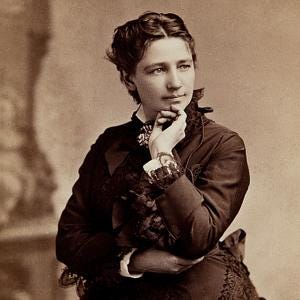
Yes, Victoria Woodhull was the first woman to run for president and the first female stockbroker on Wall Street, from a childhood as a medium. But she also supported eugenics.1 Erasing that piece of her washes out the truth. It turns her into a ten-second snapshot that is great for clicks, but denies the ugly truth that all of us fall prey to identities that hurt others.
The suffrage movement was rife with racism. Leaders argued who deserved the vote more: Black men or educated white women. Black women were pushed out in favor of white women’s egos. White supremacy rippled through a movement that should have been about solidarity with all facets of American women. Suffragettes starved themselves, risked their lives, and endured police brutality to secure the right to vote. The movement was important, flawed, ugly, and exclusionary. All the things at once.
When you scroll, keep in mind that the hot hit only gives a piece of the story. There is an entire universe of details and nuance left unsaid.
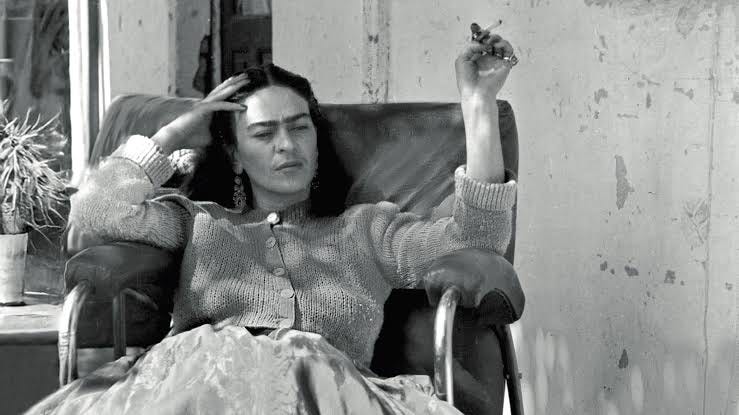
Frida Kahlo was a brilliant artist. She was so physically tortured by life and emotionally isolated by loneliness that her art became otherworldly. You can’t tease out her troubles because they ARE her art. She suffered polio as a child and a devastating bus accident as a teen.2 Her pain and Mexican heritage was the fabric of her expression—it’s impossible to boil her down to a simplified explanation. Her life and art were incredibly complex.
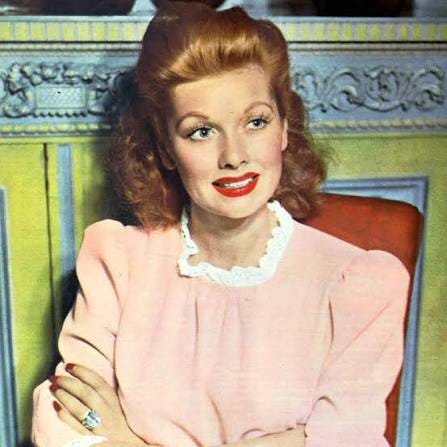
I’ve always admired Lucille Ball. Sure, she was the first woman to own a major Hollywood studio and singlehandedly saved Star Trek. But she was a white woman who married a Cuban man in the public eye in 1940. Unheard of. They were initially turned down by studios because of fear around showing an intercultural marriage.3 Her success came from knowing herself deep down to the core, and telling society to stay the hell out of her business. She loved herself enough to ignore the rules. That’s the part that gets left out of the sizzle reel.
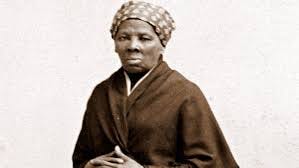
Harriet Tubman is one of my favorite figures from our history books. What often gets boiled down to “conductor of the Underground Railroad” was a life story so full of devotion to freedom that I can’t begin to detail it all in one paragraph. But the center of her struggle was being a disabled woman. This rarely gets discussed. A slave owner smashed a two-pound weight into her head as a girl. This head injury led to lifelong seizures, migraines, and narcolepsy. She experienced profound visions of freedom during her seizures. She described angels singing and messages from God.4 She survived thirteen trips back into slave territory, including the Combahee River siege, where she saved 750 people in one night. Her incredible life isn’t just impressive stats. It was part mystical and part survival from horrific circumstances.
This page is a combination of historical highlights and comparing history to today’s society. It is my firm belief that writing about history must be about more than facts. It is about celebrating the complicated experience of womanhood and finding inspiration in the rich narratives of women who came before us. I want to celebrate their stories, not as heroes or idols, but as fully human and fallible.
The moment we expect heroics, we lose the beauty of a fully lived life.
Our inspiration doesn’t lie in theatrics. Badass women in history means we keep going, doing our best at every turn, and learning from our unavoidable mistakes. I never want us to look at history as a portrait of unattainable expectations.
Because history is now. It isn’t a static thing in a stuffy old book. It is a living, breathing thing we are crafting at this very moment. How will you write your chapter?
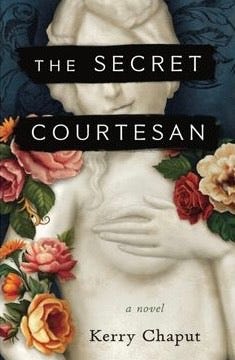
Thank you for reading. I don’t monetize my substack, but please buy my book The Secret Courtesan about a female sculptor erased from history, and the fight to bring her truth to light. For more ways to support me, click the link below.
https://www.womenshistory.org/education-resources/biographies/victoria-woodhull
https://www.womenshistory.org/education-resources/biographies/lucille-ball
https://www.womenshistory.org/education-resources/biographies/lucille-ball
https://www.npr.org/2019/11/03/775818750/harriet-tubmans-visions
Thank you for this. Really.
For me it started with the classic children's biography series. Harriet Tubman and Amelia Earhart sitting side by side on a shelf. I was a little farm girl in the Midwest and something in those pages quietly told me that women could do extraordinary things and still be fully, messily human while doing them.
Amelia Earhart did something to me as a child that I still carry. It was not the records or the mystery. It was her power to do what others doubted in a time when that doubt was everywhere. I remember feeling…before the world starts to try to talk us out of it …that I could do that too. That innate knowing that lives in girls before anyone dims it. I went on to get my pilot's license at 16.
And even now, after nearly 20 years in conventional medicine that expanded into functional and holistic women's health… I trace some of that courage back to a little girl on a farm reading about a woman who flew anyway. As a mom I share this with my children often. To show them what a woman who remembers her power can do. The ripples continue.
We do it scared. We do it anyway.
You are doing something important here. The algorithm wants the ten-second version. You are insisting on the whole woman. That is the work that actually changes things.✨
Thank you for this, Kerry! It's true that celebrating individuals for one element of their lives or accomplishments de-humanizes them and makes them seem more like figures from a story book than the real, messy people like us. And they are most valuable as inspirations so that we real, messy people can make decisions that might one day be celebrated when the going gets tough and the choices might be life and death. Thank you for all that you do to help keep all of history alive and to inspire us.