

A Drinker with a Writing Problem
Dottie and her biting wit


In 1919, a group of writers and intellectuals gathered at the Algonquin Hotel near New York’s Times Square for a battle of wits. A roast, if you will, for a drama critic at The New York Times. They engaged in scathing criticism, wordplay, banter, and clever insults. They had such a raucous time, they decided to make it a daily occurrence. Their round table lunches became the stuff of literary legends. Among them was the brilliant queen of dark humor, Dorothy Parker.
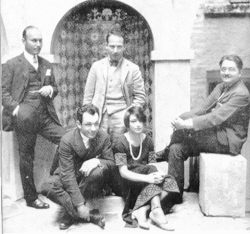
By the time she was twenty, she had lost both parents and had to support herself. This always witty lover of poetry landed in New York magazine publishing. In 1914 she sold her first poem and used this to storm into Vanity Fair to demand a job. It worked. At 22, she took an editorial job at Vogue. She became a drama reviewer at Vanity Fair, becoming the first female critic on Broadway.1
These literary luncheons would eventually give way to the birth of The New Yorker, and Dorothy was on the founding board. There she published poetry, fiction, and book reviews. She became friends with Ernest Hemingway, Harpo Marx, F. Scott Fitzgerald, and many influential socialites.
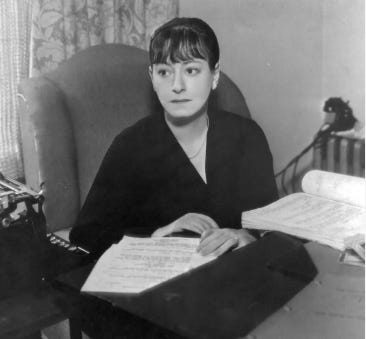
But Dorothy wasn’t one to climb the social ladder and live in adoration. Her biting smarts rode the edge of darkness, hiding a deep sadness. Humor and pain lived in the same space for her. Her words were razor-sharp and funny, holding just enough satire to keep them grounded. She used humor as social commentary, highlighting the complicated nature of being a woman. Especially one who could outwit most everyone in the room.
“I require only three things of a man. He must be handsome, ruthless, and stupid.”
“The first thing I do in the morning is brush my teeth and sharpen my tongue.”
“You can lead a horticulture but you can’t make her think.”
“Beauty only goes skin deep, but ugly goes clean to the bone."
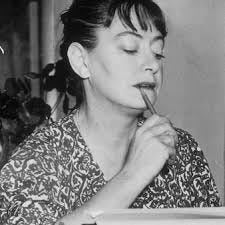
Her work frequently expressed bold humor with a thread of loneliness underneath. Her love life was turbulent. She suffered with depression and alcoholism, and attempted suicide multiple times.
Her poem “Resume” reflects her unimaginable struggles in her usual pithy witticism:
Razors pain you;
Rivers are damp;
Acids stain you;
And drugs cause cramp.
Guns aren’t lawful;
Nooses give;
Gas smells awful;
You might as well live.
Dorothy never held her tongue. She pushed against the rigid, formal environment at Vogue, constantly writing work editors refused to print. Vanity Fair fired her for her scathing critiques of Broadway producers and actors—many of whom advertised with the magazine. She refused to sanitize her opinions, even when they were big names. On one play’s review, she wrote, “Not even the presence in the first-night audience of Mr. William Randolph Hearst . . . could spoil my evening.”
This, unsurprisingly, angered the men in power. After they let her go, she would never again hold a steady desk job or draw a regular salary.
Dorothy, never one to give up, reinvented herself. She was a fixture in the New York scene in the 1920s, but by the time the Great Depression hit, her saucy commentary was labeled flapper fluff, and considered out of fashion. I mean, the powers that be will only tolerate a woman who writes outside the lines for so long.

She pivoted to screenwriting, writing plays for Broadway and Hollywood. Parker’s second marriage was a turbulent one, but they co-wrote some successful work, including, A Star is Born. It appears Dorothy (or Dottie as she was known) did the bulk of the work on this screenplay.2 The heart of that story is the tragedy of being a woman on the rise and loving a man at the tail end of his. Their work earned several Academy Award nominations.
Dorothy’s humor was her shield. A safe way to express her deepest pain and vulnerabilities. Her personal life was volatile. She never could live the way everyone wanted her to, and her commitment to her truest self left her with perpetual, blinding loneliness. She was an outsider, and her writing reflected that—but on her terms.
“Men seldom make passes at girls who wear glasses.”
She discounted her achievements, even mocking herself. She had big ambitions and made no apologies for them, but lived the harsh space between success and despair. The reality of this place can be seen acutely in A Star is Born. Her aspirations to be a great writer were tempered by a deep insecurity, and I’d presume, anger over her limitations in a world that shunned wryly intellectual women.
“The cure for boredom is curiosity. There is no cure for curiosity.”
She became involved in social justice, reporting from Spain on the Civil War, and committing to the Civil Rights movement here in the US. Her leftist, anti-fascist views led to her being blacklisted from Hollywood, and the FBI compiled a lengthy dossier, led by the ruthless and blatantly corrupt J. Edgar Hoover. They tracked her for 25 years. When questioned at her home, she told FBI agents: “Listen, I can’t even get my dog to stay down. Do I look to you like someone who could overthrow the government?”3
Exiled from the film industry, she did what Dottie did. Used her voice. Before her death in 1967, she left her estate to Dr. Martin Luther King Jr.—a man she had never met. After his assassination, the estate moved on to the NAACP. Though it wasn’t much financially, the symbolism was powerful. 4
For Dorothy, the things that made her successful were also what drove her to darkness, often joking that she was “a drinker with a writing problem.”
She’s always fascinated me for her refusal to play nice. She played honest—brutally, painfully honest. Her vulnerabilities and emotional pain were right there in her acerbic words—if anyone cared to look. She returned again and again to writing, despite the continual struggle to put out work she could claim was “good enough.” Just like her second marriage, which she returned to through separations and turmoil. She hungered for self-expression and for love, as her words seemed to burst with longing.
She was known as enormously warm and funny, but had a dark side of cruelty, especially when she drank. She gave away money freely, and loved her friends fiercely, but turned her criticism to the world around her, often unable to stop pushing boundaries. The world saw a brave writer who slayed the written word with her wisecracking insults, but just like all famous women, she was all that and the honest raw parts that weren’t celebration-worthy. She struggled with the deeply human parts of herself, never feeling loved or emotionally safe.
Maybe that’s why I like celebrating her. She was true to herself, even when the less likeable parts took hold. I often wonder who she could be soft with. Who she was behind all that bravado and smarts. I presume she was just as broken as the rest of us, just trying to find a way to love herself.
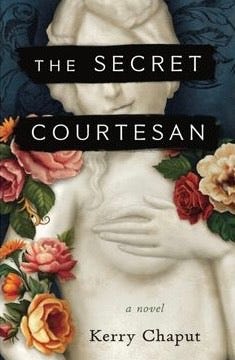
Thank you for reading. I don’t monetize my substack. If you’d like to support me, please buy my book about women artists erased by history:
**A note on quotations: Much of her writing was wordplay on established sayings. I quoted her where I could find reference to her as the original writer, but some have been questioned over the years. I did my best to only include quotes attributed to her across multiple sources.
https://dorothyparker.com/gallery/biography
https://scriptmag.com/history/dorothy-parker-born-to-be-a-star-of-poignant-and-pointed-word-play
https://www.smithsonianmag.com/smart-news/dorothy-parkers-fbi-file-available-public-first-time-decade-180969044/
https://www.poetryfoundation.org/poets/dorothy-parker
Will definitely read your book!